
Nike running shoes. Your training. Your shoe.
Shoes on, laces tied, door open. After that it's just rhythm. That feeling is why we run. Which shoe carries us forward is a matter of character. Nike running shoes are the lively, fast ones rather than the emphatically soft ones. They sit narrow on the foot and look good doing it. And even where the sole is allowed to be tall and properly cushioned these days, the ride stays reactive: Nike gives you feedback and propulsion instead of simply padding you away. You feel the spring effect with every step, not just cotton wool underfoot. Then there's that unmistakable Nike look. Let's be honest: hardly any other shoe works just as well on the track as it does with your jeans. Which Nike running shoe is yours depends less on your level than on what you have planned.
Key facts at a glance
- Road, one shoe for almost everything: Nike Pegasus
- Road, plenty of soft cushioning for easy long runs: Nike Vomero
- Road with support, if your foot rolls inwards: Nike Structure
- Speed sessions and race preparation with carbon: Zoom Fly
- Race day, depending on the distance: Streakfly, Vaporfly, Alphafly
- Forest tracks and gravel paths: Nike trail running shoes
- Fit: Nike tends to run narrow.
Table of contents
Which Nike running shoes suit your training?
Nike running shoes for the road: Pegasus, Vomero & Structure
Nike's road range stands on three legs: Pegasus, Vomero and Structure. None of them is the better shoe, they are simply built for different things. Which one is yours doesn't depend on which one "can do more" – it depends on what you want or need.
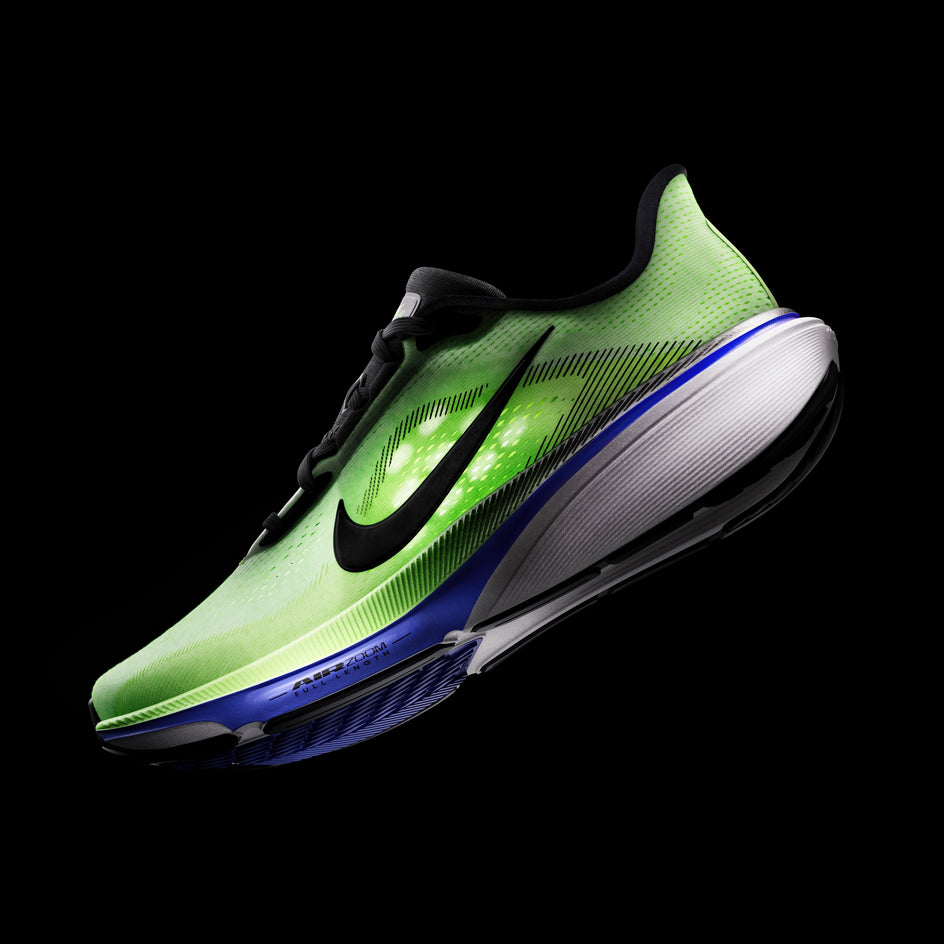
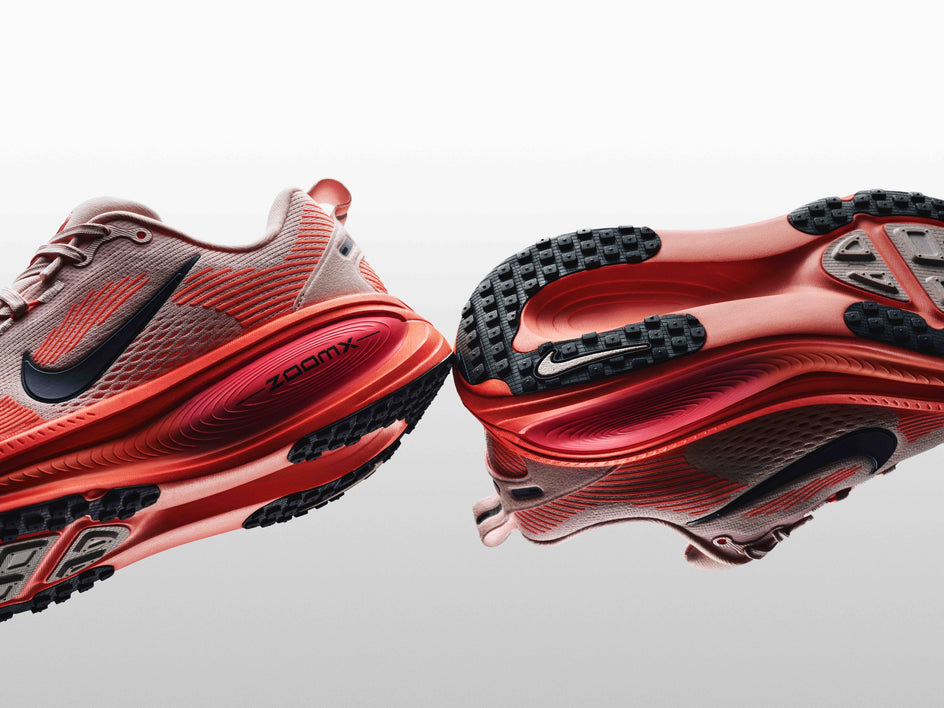
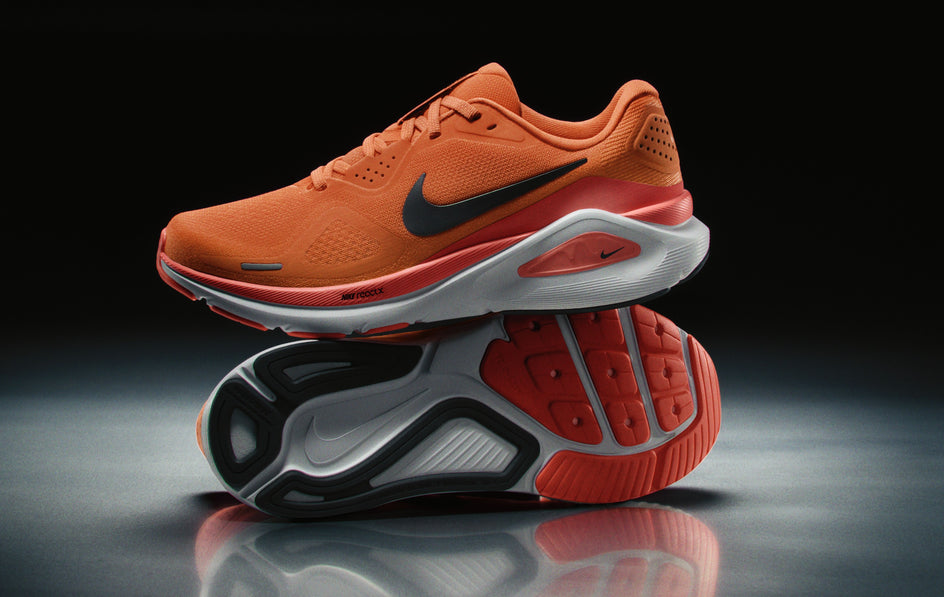
Nike Pegasus. Your all-rounder among Nike running shoes
The Pegasus has been Nike's best-selling running shoe for years, and there's a reason for that: it can do almost everything. And it does it rather well, too. Medium cushioning, ReactX foam underfoot, two Air Zoom units that give it its liveliness. You run it easy in the morning, pick up the pace here and there and take it on a longer loop as well, without it running out of steam. If you're just looking for one good pair of Nike running shoes for your everyday training and don't want to commit to anything in particular, it's a safe choice for you. → To the Nike Pegasus
Nike Vomero. Plenty of soft cushioning for your easy miles
Where the Pegasus stays sporty and neutral, the Vomero piles on the cushioning. The current 18 stacks two foams on top of each other: the reactive ZoomX above and the more durable ReactX below. That puts you up high and soft. These are your Nike running shoes for long, easy runs and for anyone who likes things a little plusher underfoot. That said: the Vomero is heavier than the Pegasus, and you'll notice that when you pick up the pace. → To the Nike Vomero
Nike Structure. This Nike running shoe gives you support.
The Structure is Nike's offering for anyone who needs a bit more guidance in their shoe. If your foot rolls inwards as you push off, the Structure keeps you gently on track without forcing you into a corset, the way the old stability shoes liked to do. For neutral runners who simply want a soft roll-through, that may be too much of a good thing (they're better off in the Pegasus or Vomero). If you do need support, though, there's hardly any way around these Nike running shoes. → To the Nike Structure
Affordable entry: Winflo and Journey Run
It doesn't always have to be the Pegasus. For a smaller budget, Nike has two more affordable everyday shoes in its line-up: the Winflo and the Journey Run. Both get you onto the road with neutral cushioning without you having to dig deep – a solid starting point if you're just getting into running or simply want an inexpensive pair to get going.
One more money-saving tip: last year's models of Pegasus, Vomero & co. regularly land in our Nike sale. Depending on the model, the step up to the current version is sometimes bigger, sometimes smaller – the price advantage is almost always there. It's worth a look before you reach for the newest model. → To the Nike sale
Nike racing shoes – which Nike running shoes for which distance?
With the fast Nike running shoes, it mainly comes down to distance. You'll find the details on plate, foam and tuning on the pages of the individual models. Here you get the basic classification of which shoe is built for which race:
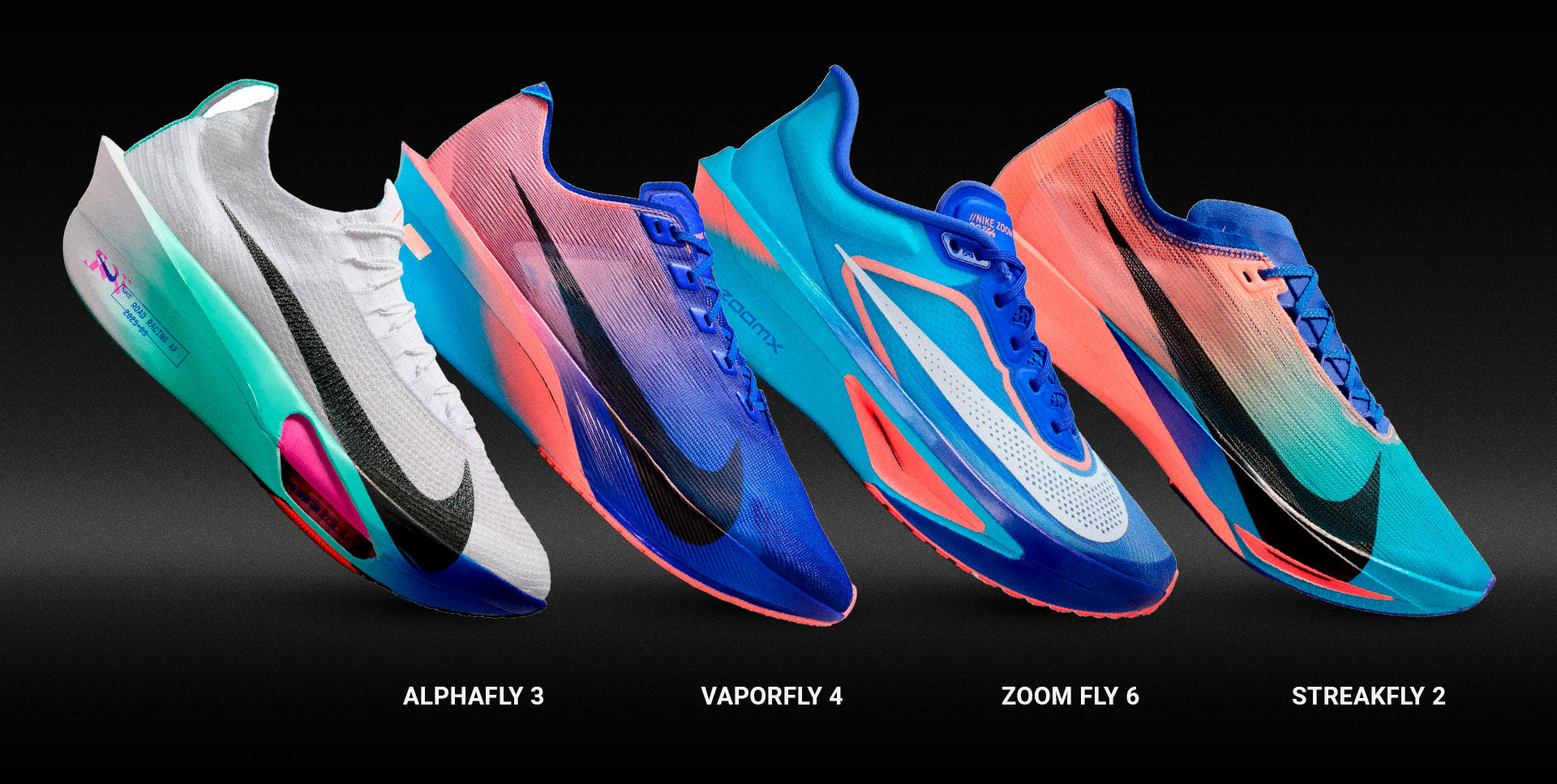
One tip: anyone who already has a Vaporfly or Alphafly in the cupboard tends to use the Zoom Fly for tempo runs in training, saving the expensive racing shoe.
Nike running shoes for the trail
As soon as you leave the road and switch to forest tracks and gravel paths, you need more grip and protection than your road shoe gives you. That's what Nike's own trail line is for. The Pegasus Trail is the accessible option for mixed terrain, and there are more technical models for rougher ground. We've put all Nike trail running shoes together for you on a page of their own. → To the Nike trail running shoes
Frequently asked questions about Nike running shoes
To start with, you'll go least wrong with the Nike Pegasus. It has a neutral set-up, medium cushioning and forgives a lot, whether you're just starting out or have been running for a while. You don't need a carbon shoe at the beginning; it only plays to its strengths at higher speeds.
Both are neutral Nike running shoes for the road, the difference lies in the feel. The Pegasus is the versatile all-rounder with medium cushioning, the Vomero the softer, more highly cushioned shoe for long, easy runs. If you want one shoe for almost everything, take the Pegasus. If you're after that plush ride, the Vomero is your go-to.
The more weight that lands on the sole with every step, the more cushioning and durability you want underfoot. That makes the Vomero our first choice: it's Nike's most highly cushioned road shoe, and the firm ReactX base beneath the soft ZoomX gives you a platform that doesn't bottom out straight away under higher loads – and that lasts longer. One limitation: if your foot rolls inwards as you push off (which happens more often under more load), you're better served by the supportive Structure than by the neutral Vomero. In short: neutral roll-through → Vomero, need for support → Structure.
Nike tends to run somewhat narrower and shorter, especially with its racing models. Better to try half a size up if you have wider feet or fall between two sizes.
Nike builds two shoes for the marathon: the Vaporfly and the Alphafly. The Vaporfly is the more versatile of the two and suits many distances, above all from 5 km to the half marathon, while the Alphafly with its Air Zoom pods is designed specifically for the long marathon distance and maximum cushioning. If not every second counts, you can also run a decent marathon in the Zoom Fly, and a little more cheaply at that.
The Pegasus is a neutral shoe, the Structure a supportive one. As long as your foot rolls through cleanly and neutrally, the Pegasus is enough for you. If the foot tips inwards on landing, the Structure gives you the support the Pegasus does without.
Where Nike running shoes come from
Nike running shoes go back to the 70s, when Bill Bowerman and his waffle-iron sole turned a small import company into one of the biggest sports brands in the world. To this day, what Nike wants above all is to get faster. The brand's biggest leap so far came in 2017 with the Vaporfly – the carbon racing shoe that noticeably speeds up running and kicked off the era of carbon racing shoes. Ever since, every model has helped shape what we understand a really good running shoe to be.
We hope we've been able to show you your niche in our range of Nike running shoes: for the road you have the pick of Pegasus, Vomero and Structure. For speed and racing it's the carbon models, and for off-road there's Nike's trail line.